
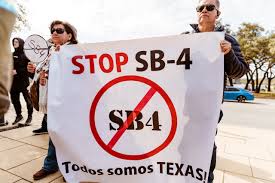
State vs. Federal Showdowns and Texas SB4
State vs. Federal Showdowns and Texas SB4 illustrate the ongoing tension between state-level immigration enforcement efforts and federal authority over immigration policy.
In modern American federalism, clashes between state governments and the federal government aren’t just legal abstractions — they’re real political showdowns with profound impacts on policy and people’s lives. At the forefront of this debate is Texas Senate Bill 4 (SB4), a controversial immigration law that has triggered intense conflict between Texas state leaders and the federal government, resulting in high-stakes courtroom battles and broader questions about the balance of power in the United States.
What Is Texas Senate Bill 4?
Texas Senate Bill 4, signed by Governor Greg Abbott in December 2023, represents one of the most aggressive attempts by a state to take control over immigration enforcement — an area traditionally governed by the federal government. The law would make crossing into Texas from Mexico illegally a state crime, empower state and local officers to arrest undocumented migrants, and grant state judges authority to order their return to Mexico.
State champions argue that SB4 fills a void left by perceived federal inaction, asserting Texas has the right to defend itself under the Constitution’s so-called “invasion clause.”
Why SB4 Is a Federal vs. State Flashpoint
At its core, the dispute over SB4 highlights a fundamental aspect of U.S. governance: federal supremacy vs. state autonomy. The U.S. Constitution gives the federal government authority over immigration — including the entry, removal, and treatment of noncitizens — as part of its national and foreign policy powers. Federal courts historically have reinforced this, stating that immigration enforcement lies primarily with the federal government and not individual states.
The Department of Justice and civil rights organizations challenged the law in federal court, arguing that SB4 is preempted by federal law and violates the Supremacy Clause of the Constitution.
A U.S. district court granted a preliminary injunction blocking enforcement, and the 5th Circuit Court of Appeals has upheld that block, reaffirming that immigration enforcement is an exclusive federal responsibility — a view that draws on long-standing constitutional principles.
If the legal conflict ultimately reaches the U.S. Supreme Court, its decision could reset the boundary lines between state power and federal authority in immigration matters.
State vs. Federal Conflict: Not Just Immigration
While SB4 has drawn national headlines, it’s part of a broader pattern of intergovernmental tension across multiple policy areas:
1. Sanctuary Cities and Immigration Cooperation
In contrast to SB4’s approach, several states and cities — like New York and Illinois — have passed “sanctuary” or “Green Light” laws that limit cooperation with federal immigration enforcement. The U.S. Department of Justice has sued these governments, arguing they impede federal authority.
These legal battles underscore the competing visions states have for immigration policy — some seeking greater enforcement powers, others defending residents from federal enforcement actions.
2. Cannabis Legalization
Another classic federal-state showdown centers on marijuana laws. Many states have legalized medical and recreational cannabis, even though marijuana remains illegal under federal law. This has created a confusing legal landscape where state-legal businesses may still face federal enforcement risks.
3. Federal Deployments and National Guard Authority
In 2025, California sued federal officials, claiming an unlawful federal deployment of the California National Guard during protests — once again raising questions about state sovereignty and federal authority under the 10th Amendment.
4. Federal Immigration Crackdowns and State Backlash
Recent federal immigration operations in places like Minnesota have sparked lawsuits and political resistance from state officials who argue that federal actions threaten civil liberties and local governance — another arena where state and federal jurisdiction collide.
Why These Showdowns Matter
These clashes aren’t just legal disputes; they reflect deep disagreements about:
- Who gets to set policy on issues that deeply affect everyday life — from public safety and civil liberties to economic activity.
- How the Constitution should be interpreted — balancing a strong union with states’ rights to innovate and protect their communities.
- The role of courts in federalism, especially the Supreme Court’s role in setting lasting precedents for how conflicts are resolved.
Scholars and policymakers are keeping a close eye on the ongoing judicial battle over SB4 and other state-federal disagreements. States are viewed by some as “laboratories of democracy,” trying novel concepts and regulations. Others fear that unfettered state involvement could result in a disjointed judicial system, especially when it violates national law.
It is evident that the legal and political environment of the United States in 2026 and beyond will be shaped by state versus federal confrontations, which are more than just theoretical discussions.
Leave a Reply