
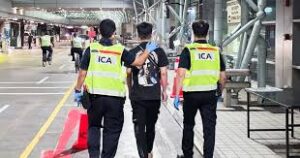
Singapore ICA Immigration Statistics
Singapore ICA immigration statistics reveal a 38% increase in refusals at border checkpoints in 2025, highlighting the authority’s focus on enhanced risk profiling and tighter document verification.
Refusals at Singapore’s borders increased by 38% in 2025, according to the Immigration and Checkpoints Authority (ICA). Around 45,700 travellers were denied entry this year, compared with approximately 33,100 in 2024. The increase demonstrates Singapore’s changing border management strategy, which strikes a balance between security and its status as a major international traffic center.
Why Refusals Are Rising
Several factors help explain this jump:
1. Stronger Risk Profiling
ICA has enhanced its data analytics and pre-arrival risk assessments, allowing officers to identify travellers who may pose security or immigration risks more efficiently.
2. Focused Use of Technology
The expansion of passport-free and automated clearance systems has sped up entry for most travellers, while freeing officers to focus on higher-risk individuals.
3. Tighter Enforcement on Documentation
Refusals often stem from fraudulent documents, multiple identities, or signs of potential overstaying or illegal work. The authority’s increased scrutiny ensures that high-risk travellers are intercepted before entering the country.
Implications for Travellers
- For the majority: Singapore remains efficient, welcoming, and easy to navigate. Automated systems make entry smooth for residents and frequent visitors.
- For flagged travellers: Those identified as high-risk may face longer checks or outright refusal, emphasizing the importance of correct documentation and transparent travel intentions.
- For international observers: Singapore’s approach is a case study in smart, technology-driven border security, combining strict risk management with smooth processing for legitimate visitors.
The roughly 38% increase in refusals reflects smarter border enforcement rather than a crackdown on travel. Singapore continues to prioritize security and risk management, ensuring safety for residents and travellers alike, while maintaining its reputation as one of the world’s most efficient travel hubs.
For visitors, the key takeaway is clear: travel prepared, carry correct documentation, and respect immigration rules to ensure a seamless experience at Singapore’s checkpoints.
Frequently Asked Questions (FAQs)
1. Why did Singapore see a 38% increase in immigration refusals in 2025?
The rise is mainly due to enhanced risk profiling, stricter document checks, and smarter use of technology at checkpoints. The ICA is identifying more high-risk travellers before they enter, rather than discouraging travel overall.
2. Who is most likely to be refused entry?
Travellers may be refused entry if they:
- Have fraudulent or tampered documents
- Show signs of potential overstaying
- Are suspected of illegal work or have criminal history flagged in pre-arrival checks
3. Does this mean Singapore is harder to enter for most travellers?
Not at all. Most travellers experience smooth entry, especially those using automated or passport-free clearance. The increase mainly affects those flagged as high-risk.
4. How can travellers avoid being refused entry?
- Ensure all travel documents are valid and authentic
- Follow Singapore’s visa and entry requirements
- Be transparent about purpose and length of visit
- Avoid actions that could raise red flags with immigration authorities
5. Are these refusals permanent?
Refusals are usually case-specific. Some travellers may be allowed to reapply for entry after addressing the reasons for refusal, such as obtaining proper visas or correcting documentation issues.
6. How does Singapore identify high-risk travellers?
ICA uses data analytics, pre-arrival risk assessments, and integrated monitoring systems to identify potential threats. This allows officers to focus on travellers who require additional checks.
7. Will the number of refusals continue to rise?
It’s possible, especially as Singapore strengthens border security and adopts more advanced technology. However, the majority of travellers with proper documentation should not be affected.
Leave a Reply