
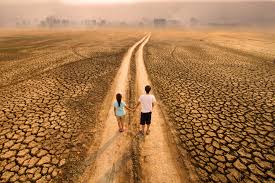
Climate Migration
Climate Migration in 2026 is increasingly shaping global policies as communities adapt to rising sea levels, extreme weather events, and shifting agricultural zones.
The recent climate change is no longer a distant environmental threat — it is already reshaping human societies, economies, and political orders. One of its most profound social impacts is climate-driven displacement: the movement of people forced to leave their homes due to floods, droughts, storms, rising seas, and deteriorating livelihoods. But while millions of people are on the move because of climate hazards, global laws and policies are struggling to keep pace with this reality.
Why the Legal Gaps Matter
At the heart of the policy challenge is a legal void: climate-induced displacement is not recognized under the cornerstone of refugee law, the 1951 Refugee Convention. That treaty provides protection only for people fleeing persecution on specific grounds, such as race or political opinion — not environmental harm. This means that individuals displaced by climate change do not qualify as refugees under current international law, and so lack guaranteed legal protection and rights as they cross borders.
Without formal recognition:
- People lack a clear legal right to cross borders in search of safety.
- States are not obliged to grant protection or residency.
- The key humanitarian principle of non-refoulement — preventing return to danger — may not apply.
This gap creates a patchwork of national responses, leaving many climate-displaced people in limbo, especially if they do not fit conventional asylum categories.
Emerging Policy Tools: Humanitarian Visas & Mobility Agreements
Recognizing these shortcomings, some governments and advocacy groups are experimenting with alternative pathways to provide protection:
Humanitarian and Special Visas
A growing number of experts are calling for dedicated humanitarian visas tailored to people displaced by climate change. Recent proposals, such as in the Pacific context, argue that Pacific Islanders at risk from rising seas need rights-based visa categories that acknowledge their vulnerability and preserve dignity and opportunity.
Australia, for example, has implemented one of the first climate visa programs, allowing up to 280 Tuvaluans annually to relocate as rising sea levels threaten their islands. The first cohort of climate migrants has already arrived, entering communities in cities and regional towns with support services to ease the transition.
Other countries, like Argentina and Brazil, have experimented with humanitarian visas for people affected by environmental catastrophes, and programs like the U.S. Temporary Protected Status occasionally cover those displaced by severe disasters.
Regional Free Movement and Planned Relocation
Beyond visas, regional free movement agreements (e.g., within West Africa or the Caribbean Community) can offer alternative channels for climate-displaced people to move safely between neighboring states. Additionally, planned relocation programs, like those developed in Fiji, aim to move entire communities at risk in situ before disaster strikes.
International Responsibility and Shared Custody
The climate displacement crisis also raises profound questions of responsibility:
- Equity and historical emissions: Countries with high historical emissions — mostly wealthier nations — bear a heavier share of responsibility for creating the conditions driving climate migration, suggesting a moral duty to support climate-displaced populations.
- Human rights obligations: Recent advisory opinions by courts, such as the Inter-American Court of Human Rights, highlight that states must protect human rights threatened by climate impacts and avoid returning people to life-endangering conditions.
- Adaptation and in-place support: While migration pathways are essential, they must complement — not replace — efforts to help vulnerable communities adapt in place through infrastructure, disaster risk reduction, and social protection measures.
Yet progress on international frameworks remains slow. Instruments like the Global Compact for Safe, Orderly and Regular Migration acknowledge climate displacement but aren’t legally binding, and efforts to amend existing treaties to include climate refugees face political resistance.
What Comes Next? Toward a Global Policy Shift
The trajectory of climate-driven displacement policy suggests that:
- Legal reform is still essential. Climate migration needs clearer definitions and rights under international law if protection gaps are to close.
- Policy innovation matters. Humanitarian visas, special migration programs, and regional mobility arrangements are important stopgaps that can be scaled and standardized.
- Solidarity and equity must lead the narrative. As displacement intensifies, wealthier states must share responsibility — both financially and through safe pathways for those fleeing climate harm.
Ultimately, climate migration isn’t just a humanitarian issue — it’s a test of global cooperation in the face of a changing planet. Without bold legal and policy innovations, millions could remain unprotected as they seek safety, survival, and dignity in a warming world.
Frequently Asked Questions (FAQs)
1. What is climate migration?
Climate migration refers to the movement of people who are forced to leave their homes due to climate-related factors such as floods, droughts, rising sea levels, extreme heat, and environmental degradation that threaten lives and livelihoods.
2. Are climate migrants legally recognized as refugees?
No. Under current international law, including the 1951 Refugee Convention, people displaced solely by climate change are not legally recognized as refugees. This creates a protection gap for climate-displaced individuals.
3. Why is climate-driven displacement increasing globally?
Climate-driven displacement is increasing due to more frequent and severe natural disasters, long-term environmental changes, and reduced access to food, water, and safe housing caused by climate change.
4. What legal gaps exist for climate migrants?
The main legal gap is the absence of a binding international framework that grants climate migrants the right to cross borders, seek asylum, or receive long-term protection based on environmental harm alone.
5. What are humanitarian visas and how do they help climate migrants?
Humanitarian visas are special migration pathways that allow individuals affected by disasters or extreme hardship to legally enter and stay in another country. Some governments are exploring or implementing these visas to protect people displaced by climate impacts.
6. Which countries are taking steps to address climate migration?
Countries such as Australia, Argentina, Brazil, and New Zealand have introduced or piloted humanitarian visas, climate mobility agreements, or planned relocation programs aimed at supporting climate-affected populations.
7. What role does international responsibility play in climate migration?
International responsibility involves shared global action, particularly by high-emission and wealthier countries, to support climate-displaced people through funding, legal pathways, resettlement options, and climate adaptation assistance.
8. Can people be forced to return to climate-dangerous areas?
In many cases, yes. Because climate migrants lack formal refugee status, they may be returned to unsafe environments unless national or regional protections apply. This raises serious human rights concerns.
9. Is climate migration always cross-border?
No. Most climate displacement occurs within a country’s borders. However, cross-border migration is increasing as climate impacts intensify and local adaptation options become exhausted.
10. What solutions are being proposed for the future?
Proposed solutions include expanding humanitarian visas, creating legal recognition for climate refugees, strengthening regional free-movement agreements, funding climate adaptation, and developing international frameworks that address climate-driven displacement.
Leave a Reply