
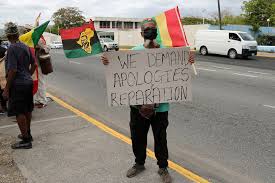
New Legal & Political Efforts to Enact Reparations in 2025
New legal & political efforts to enact reparations in 2025 are reshaping national debates on racial justice, economic equity, and historical accountability.
Across the world, the conversation around reparatory justice has shifted from moral debate to concrete legal and political action. Once considered a fringe demand, reparations for slavery, colonialism, and systemic racial discrimination are now being examined through official commissions, legislative proposals, and diplomatic negotiations.
In 2025, new momentum is reshaping what accountability, justice, and historical repair look like on national and global levels.
1. The U.S. Reignites the H.R. 40 Debate
One of the biggest developments in 2025 is the reintroduction of the Commission to Study and Develop Reparation Proposals for African Americans Act (H.R. 40).
For decades, H.R. 40 has symbolized the federal government’s unfinished business with the legacy of slavery. The bill does not authorize payments; rather, it establishes a commission to study:
- The lasting effects of chattel slavery
- Racial discrimination in housing, healthcare, education, and employment
- Potential frameworks for reparatory justice, including restitution, compensation, or institutional reform
Its renewed push signals rising political will—especially at the state and local levels, where cities like Evanston (Illinois) and San Francisco, and California’s statewide task force, have already developed or piloted their own reparations models.
2. Former Colonial States Face Global Pressure
Outside the U.S., former colonial empires are being challenged to address the economic and cultural destruction they inflicted during centuries of rule.
Caribbean nations under the CARICOM Reparations Commission continue to demand that European governments—including the UK, France, Spain, and the Netherlands—enter formal negotiations. The pressure has grown louder as historical archives, museum restitutions, and economic inequality data strengthen the repair case.
African countries such as Nigeria, Kenya, and Namibia are also pushing harder for acknowledgment and compensation for forced labor, massacres, and land dispossession under colonial rule.
Meanwhile, European parliaments are increasingly forced to debate:
- Debt cancellation
- Cultural restitution (returning looted artifacts)
- Formal apologies
- Economic justice programs
Though many governments remain resistant, public opinion is shifting—and the legal arguments are becoming harder to ignore.
3. Legal Scholars Are Reframing Reparations as a Human Right
New scholarship from human rights lawyers and transitional justice experts frames reparations not as charity but as a legal obligation under international law.
This approach connects the reparations movement to precedents such as:
- Holocaust restitution
- Japanese American incarceration reparations
- South Africa’s post-apartheid reconciliation measures
By drawing from established transitional justice frameworks, advocates argue that reparations for slavery and colonialism fit squarely within the global norm of repairing state-inflicted harm.
4. Cities and States Are Becoming Laboratories for Justice
While national governments debate, local governments have become fertile ground for experimentation:
- California’s Reparations Task Force continues to inspire legislative proposals on housing, healthcare equity, and anti-discrimination systems.
- Evanston’s housing-based reparations program remains a model for addressing historical redlining.
- Boston, Detroit, and Asheville are creating or expanding commissions to study local harms.
These local initiatives build political momentum by proving that reparations can be structured, targeted, and achievable.
5. Reparations Are Expanding Beyond Money
Modern reparatory justice goes beyond financial compensation. New models include:
• Institutional reforms
Police accountability, education equity, and healthcare access reforms are linked to historical harm.
• Cultural and symbolic restitution
Returning stolen artifacts, issuing formal apologies, or revising national narratives.
• Land and economic justice
Land returns, investment funds, or tax reforms targeted to historically marginalized communities.
This wider lens helps governments frame reparations as systemic repair—not just one-time payments.
6. The Global South Is Leading Moral Arguments
Countries that experienced the harshest forms of colonial violence—Caribbean islands, African nations, South Asian states, and Indigenous communities—continue to lead with unified messaging:
Reparations are not about guilt. They are about responsibility.
International bodies such as the UN Human Rights Council, UN Permanent Forum on People of African Descent, and Amnesty International have amplified these demands, urging states to move from symbolic recognition to structural repair.
The Era of Avoidance Is Ending
The renewed legal and political energy of 2025 reflects a deeper global truth: societies cannot build equitable futures on unaddressed injustice.
Reparations—once dismissed as unrealistic—are now rooted in legislative proposals, scholarly frameworks, international law, and grassroots activism. Whether through H.R. 40 in the United States, Caribbean diplomacy, or African-European negotiations, the momentum is unmistakable.
The world is slowly moving toward acknowledgment, accountability, and repair. And with each new commission, report, or legislative debate, global reparatory justice becomes less of a dream and more of a roadmap.
Leave a Reply